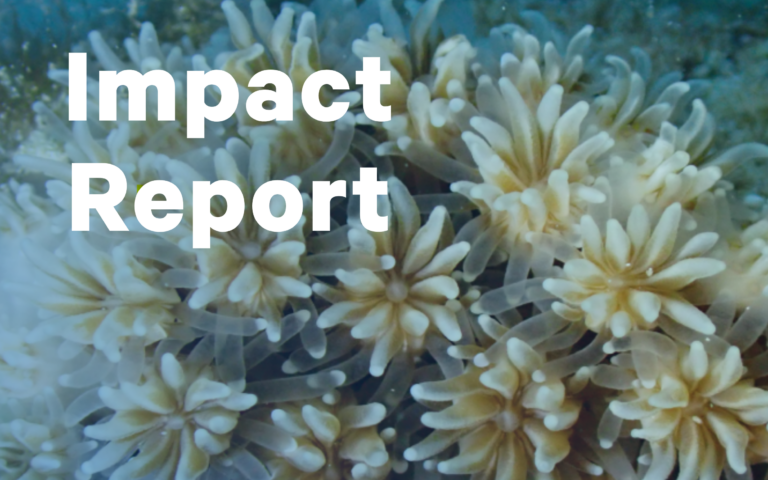
Our 2026 Impact Report shows how Reviving Pujada Bay has grown from a pilot reef into a wider, locally rooted regeneration programme.
Between February 2024 and February 2026, the initiative expanded from the 100 m² Manguihay Reef to a second 80 m² reef in Tamisan, while strengthening local production, community participation and long-term stewardship.
Some observations after two years of monitoring at Manguihay Reef:
🪸 More than 380 young corals have settled naturally on the reef. The largest has grown to approximately 3.81 cm in diameter.
🐟 More than 200 fish were counted during a single survey. Fish abundance remained consistently higher at the clay reef site than at the nearby control site, while fish biomass increased substantially after the reef was built.
🦀 Around 85% of the clay elements were occupied by mobile invertebrates such as crabs, shrimps and sea cucumbers. Tube worms, barnacles, anemones and other stationary organisms were found on virtually every element surveyed.
🌊 The Marine Protected Area surrounding Manguihay Reef was elevated to a no-take zone, protecting the developing ecosystem from fishing.
The initiative has also continued to grow on land. More than 416 people participated in community engagement activities during 2025, while 12 local Reef Regeneration Leaders completed practical training in reef building and monitoring. A local production facility in Mati, run by trained team members, can now produce up to 90 clay elements per week.
Many thanks to the local fishing communities and reef builders, government and conservation partners, sponsors, foundations and everyone else contributing to Reviving Pujada Bay. The full list of collaborators can be found in the report.
read the full report here